The Most Underserved Buyer in the Pet Supplement Channel
Walk any pet trade show and count the joint, calming and gut products. Then look for a product built for the bitch in her last three weeks of pregnancy and the eight weeks that follow. There is almost nothing on the shelf — yet this is the one customer who buys on logic rather than emotion, buys repeatedly, and buys in volume.
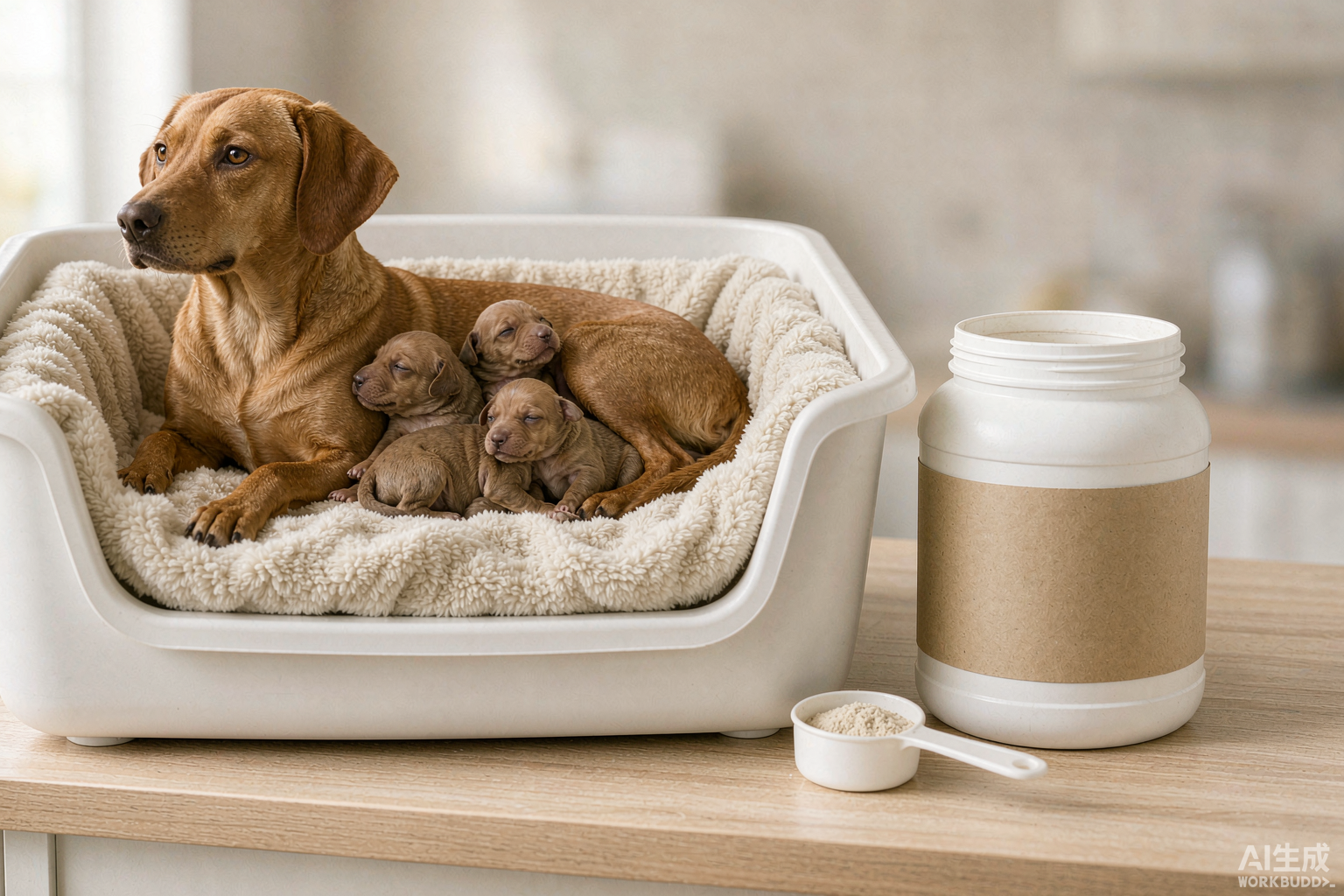
Breeders and kennels are the highest-intent B2B buyer in the supplement category. They manage litters as an operational risk: small birth weights, weak neonates, milk drop, post-whelping condition loss. A pet breeding and lactation support supplement answers a problem they can measure, which is exactly why it converts at wholesale scale rather than one bottle at a time. For brand owners building a professional channel, this is the SKU that opens the kennel account.
What This Category Can Legitimately Claim
A supplement is not a drug and must not be positioned as treatment for dystocia, eclampsia, mastitis or any diagnosed condition. Responsible brands build the category around four defensible nutritional territories: energy and protein support during the increased demand of late gestation and lactation; calcium and mineral support for normal skeletal demand; DHA and fat-soluble nutrient support for normal neonatal development via the dam; and general condition maintenance through the nursing period.
That framing answers the buyer’s real question — “how do I get nine strong puppies and a bitch that recovers?” — while staying inside supplement regulation in the EU, the US and most Asian markets.
Building the Formula: Five Layers
Products that simply add calcium to a multivitamin base are commodities. A formula that survives a breeder’s scrutiny is layered.
Layer One — Energy and Protein Density
Energy requirement in late gestation and peak lactation can rise several-fold. A support product therefore has to be genuinely nutrient-dense, not a flavoured powder: highly digestible animal protein, moderate fat with a controlled omega-6 to omega-3 ratio, and B-complex vitamins as co-factors in energy metabolism. This is the layer that produces a visible result — body condition holding through nursing — and visible results are what make a breeder reorder.
Layer Two — Calcium and Phosphorus Discipline
This is where formulations go wrong. Over-supplementing calcium in late gestation is a known risk area; the defensible approach is to support normal mineral supply at a balanced calcium-to-phosphorus ratio rather than to push a high-dose calcium bolus. Magnesium and trace minerals — zinc, copper, manganese — belong in the matrix as enzyme co-factors. If you also carry a skeletal product, keep the positioning distinct; our guide to bone and hip strength supplements covers the structural side that this SKU should not duplicate.
Layer Three — DHA and Fat-Soluble Support
DHA is deposited in neonatal tissue largely via the dam, which makes it the most credible single ingredient in this category. Microencapsulated algal or fish DHA is strongly preferred in chew and powder matrices to control oxidation and fishy odour. Vitamin A, D and E must be dosed conservatively — fat-soluble vitamins have the narrowest safety windows in the formula, and vitamin D in particular demands a validated assay method.
Layer Four — Immune Transfer Support
Colostrum intake is the neonate’s only immune start. Ingredients that support normal immune function in the dam — bovine colostrum or immunoglobulin fractions, beta-glucan, nucleotides — carry the story without overclaiming. Our breakdown of pet immune support supplements explains how to keep this language separated from a standalone immunity SKU so the two products do not compete for the same keywords.
Layer Five — Appetite and Gut Comfort
Appetite often falls in the final week, exactly when intake matters most. Palatability carriers, yeast-based digestives and prebiotic fibre support normal digestion and help hold intake. Keep this layer modest — the product is not a digestive supplement, and buyers notice when a label tries to be everything.
Three Positioning Angles That Sell
Breeder and Kennel Channel
Sell by the case, not the bottle. Professional breeders dose several animals at once and want a format that scoops or counts quickly. This channel tolerates a plain, technical label and rewards documented batch testing.
The Whelping Kit Bundle
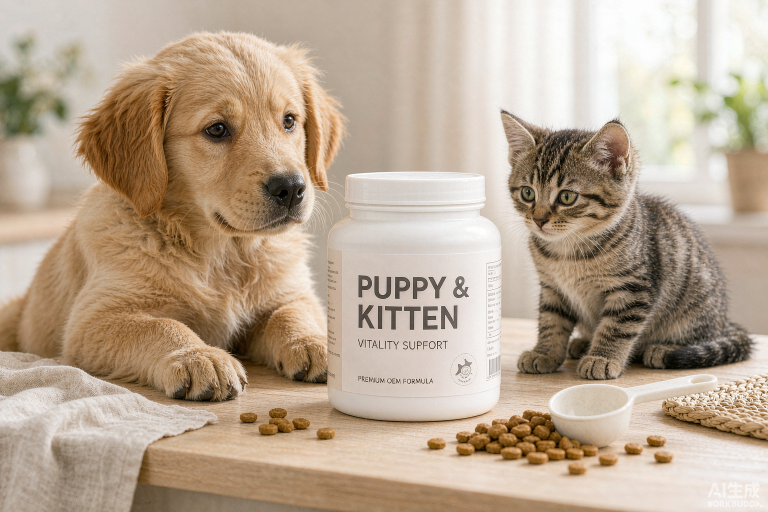
Breeders already buy whelping consumables together. A kit that pairs the dam product with a weaning transition product is a natural cross-sell — see our guide to puppy and kitten growth supplements for the SKU that picks up where this one ends.
Post-Nursing Recovery
Condition loss after weaning is the visible pain point. Position a recovery window of four to six weeks and you create a repeat purchase with a defined trigger, which is far stronger than open-ended maintenance.
Format Decisions
- Powders — best fit for kennels: precise dosing, easy top-dressing, lowest cost per dose for multi-dog use.
- Soft chews — strongest retail and e-commerce conversion, but the hardest matrix for vitamin stability and the highest unit cost.
- Pastes and gels — high perceived value for the immediate post-whelping window; water activity and preservative validation are mandatory.
- Tablets — cheapest and most stable, weakest on palatability with a picky bitch.
Compliance Boundaries to Fix Before Launch
Reproductive language attracts regulatory attention because it sits close to veterinary medicine. Keep every claim nutritional and structural: “supports normal energy levels during lactation”, “supports normal mineral supply”, “supports normal development of offspring via the dam”. Avoid anything implying treatment of pregnancy complications, milk fever, or fertility outcomes — fertility claims in particular are heavily restricted in the EU and are a common cause of rejected labels. Fix the claim matrix in the specification document so the co-packer and the copywriter work from one source.
Manufacturing Checkpoints to Audit
- Certification — GMP and HACCP with a defined scope; ask for the certificates, not the logo.
- Vitamin and mineral assay — per-lot certificate of analysis, including vitamin D and calcium, in the finished matrix rather than the premix.
- Oxidation control — peroxide and anisidine values on any fat-containing powder, with stability data at 0, 6, 12 and 24 months.
- Palatability — documented acceptance in at least one nursing bitch and one post-weaning animal before you commit to a run.
- Terms — our standard is 500 bottles per SKU with roughly 10 days production lead time, which suits the seasonal timing of most breeding programmes.
Building the Line Extension
This category is small in unit volume but disproportionately valuable: it recruits professional buyers who then stock your entire range. Lead with one format matched to the channel you actually sell through, define a single audience, and get the claim matrix signed off before the first batch. Brands that enter through the breeder channel usually find the retail line follows, because the breeder is also the most vocal recommender in the local market.