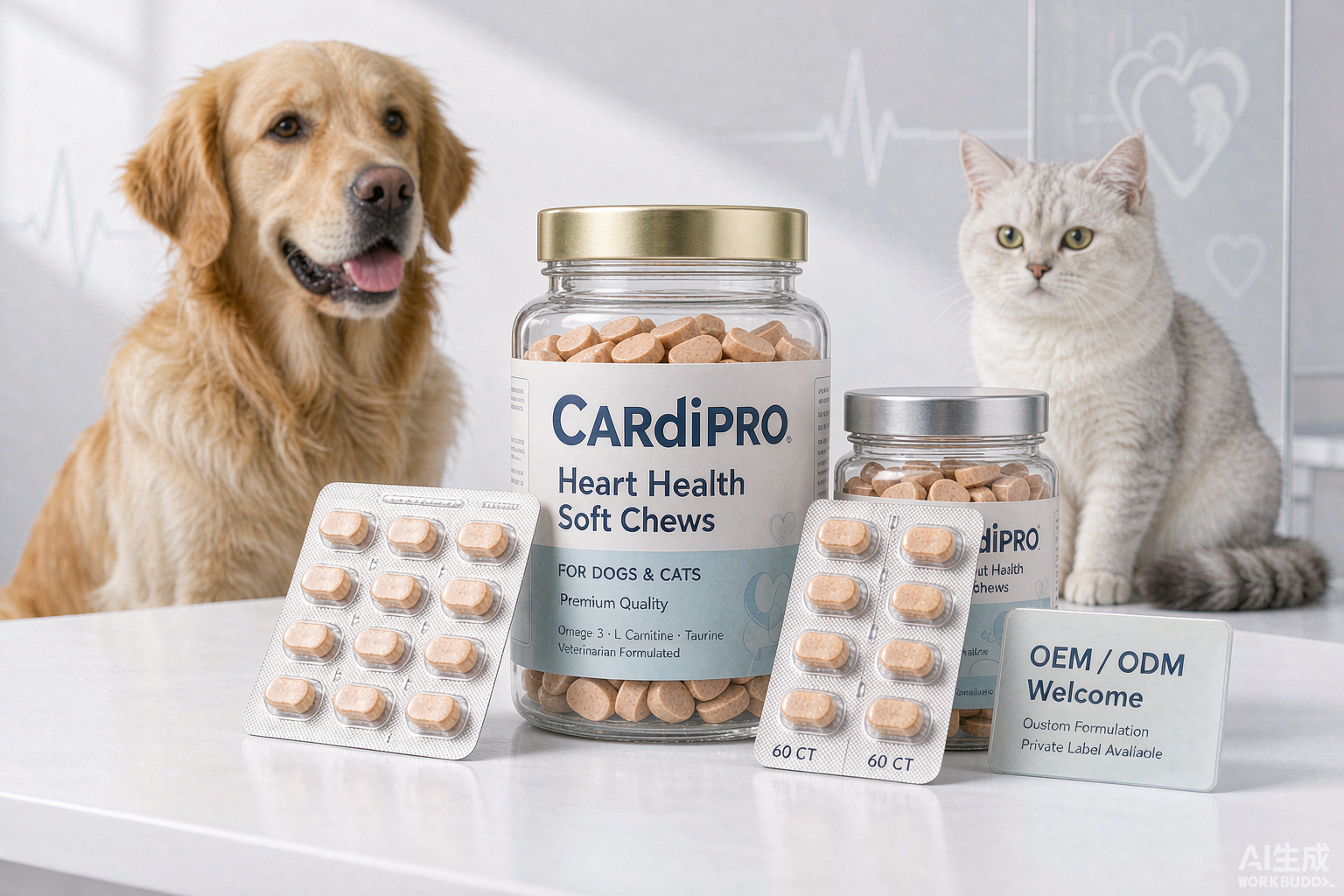
Pet Heart Health Supplements: A Private-Label Manufacturing Guide for B2B Buyers
Cardiovascular disease is one of the leading chronic conditions affecting aging dogs and cats. For brands, retailers, and veterinary-channel distributors, heart health supplements represent a high-repeat, high-trust category — but only when the formula, the dose, and the manufacturing pedigree are right. This guide walks B2B buyers through the science, the form factors, and the production standards that separate a credible cardiac line from a commodity product.
Why Heart Health Is a Strategic Category
Canine and feline hearts age differently than human hearts, and the commercial implications matter. Large-breed dogs are predisposed to dilated cardiomyopathy (DCM); cats are prone to hypertrophic cardiomyopathy (HCM), often silent until advanced. As pet owners shift toward preventive, longevity-focused spending, the demand for senior pet care supplement programs increasingly includes a dedicated cardiac SKU rather than a bundled “general wellness” pill.
From a sourcing perspective, heart health is attractive because the active ingredients are well-studied, the daily dose is small enough to fit into a chew or softgel, and the repurchase cycle is naturally long. A buyer building a private-label catalog should treat cardiac support as a flagship anchor, not an afterthought.
Key Actives in Cardiac Support Formulas
A credible heart formula is built around a short list of clinically recognized ingredients. Below are the actives most frequently specified by professional formulators.
Taurine — The Feline Essential
Taurine is an amino acid that cats cannot synthesize in sufficient quantity. Taurine deficiency is directly linked to DCM in cats, and many regions now expect taurine fortification as a baseline quality signal. For dogs, taurine remains relevant in grain-free and certain large-breed contexts. Any serious weight management supplement line that overlaps with cardiac risk should account for taurine status as well.
Coenzyme Q10 (Ubiquinone) and L-Carnitine
CoQ10 supports mitochondrial energy production in cardiac muscle, while L-carnitine aids fatty-acid transport into the mitochondria. Both are common in veterinary-recommended cardiac stacks. The manufacturing challenge is stability: CoQ10 oxidizes easily, so encapsulation and antioxidant buffering matter more than the raw-material COA alone.
Omega-3 Fatty Acids and Antioxidants
EPA/DHA from fish oil delivers anti-inflammatory support that complements the actives above. Combined with vitamin E and other antioxidants, the formula addresses oxidative stress — a known accelerator of myocardial aging. Sourcing a consistent, low-oxidation omega-3 stream is one of the highest-leverage decisions in the whole product.
Form Factors for Private Label
Cardiac supplements are most commonly delivered as:
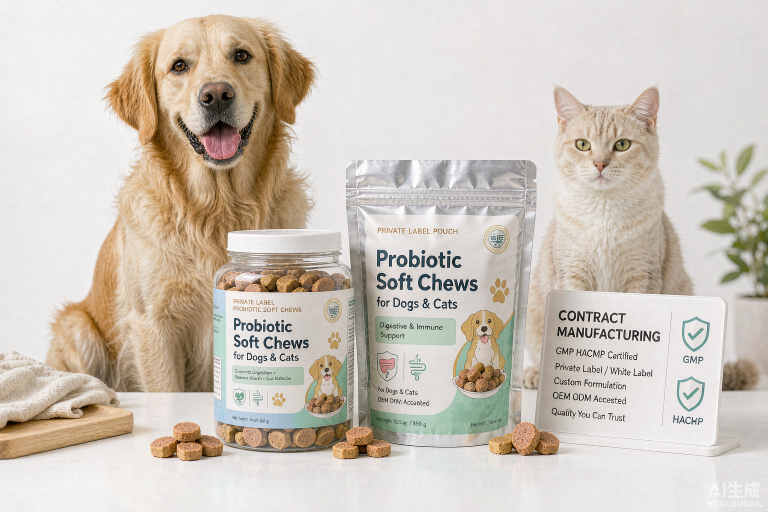
- Soft chews — the dominant retail format; palatable, shelf-stable, easy to dose by body weight.
- Softgels / capsules — preferred for oil-based actives (CoQ10, fish oil) where oxidation control is critical.
- Powders — used in veterinary and bulk-channel applications where flexibility in dosing matters.
For most B2B buyers, soft chews offer the best margin-to-trust ratio and the widest shelf presence. The trade-off is formulation complexity: binding a small, oily active into a stable chew requires real process control.
Manufacturing Standards Buyers Should Verify
In the supplement category, the factory is the product. Before committing to a contract manufacturer, verify the following:
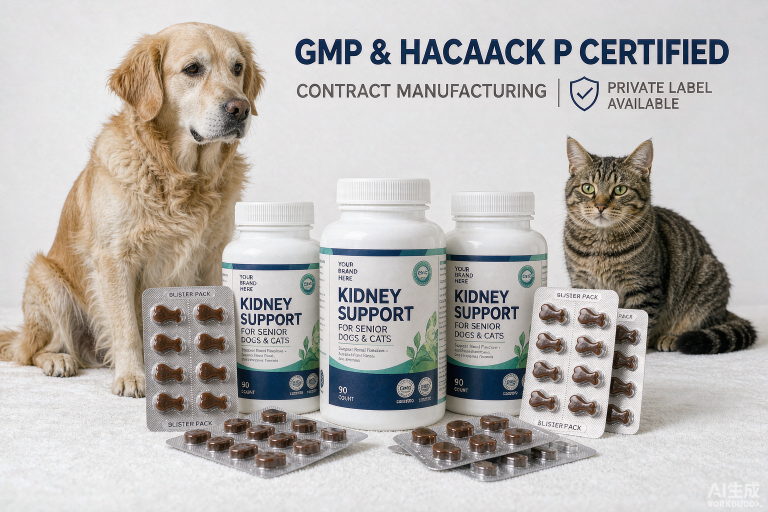
- GMP + HACCP certification — confirms both good manufacturing practice and hazard analysis at the process level. This is the minimum bar for any brand selling into regulated or quality-conscious markets.
- In-house analytical testing — identity, potency, and heavy-metal screening on incoming materials and finished goods.
- Stability data — especially for oxidation-sensitive actives like CoQ10 and fish oil.
- Traceability — lot-level documentation that supports recalls and regulatory inquiries.
Buyers who ask for these artifacts up front avoid the single most common failure mode in private label: a beautiful label wrapped around an unverifiable formula.
OEM/ODM: MOQ, Lead Time, and Customization
A typical turnkey arrangement looks like this:
- MOQ — 500 bottles per SKU is a realistic entry threshold for a custom formula, keeping launch risk manageable for new brands.
- Lead time — approximately 10 days from formula lock and artwork approval to finished, labeled goods, assuming raw materials are in stock.
- Customization — private-label branding, flavor profiling, actives concentration, and format (chew vs. capsule) are all adjustable within the manufacturing framework.
For distributors testing a new cardiac SKU, the 500-bottle MOQ means a single container can validate market response before a deeper production run. That de-risks the category entry substantially.
Building a Coherent Cardiac Line
Heart health rarely sells in isolation. The strongest private-label catalogs cross-link cardiac support with adjacent longevity and comfort categories — for example pairing it with a calming and anxiety supplement for stress-sensitive pets, since chronic stress is a recognized contributor to cardiovascular load. Bundling and educational content that explains the connections between stress, weight, and heart function convert browsers into repeat buyers.
The bottom line for B2B buyers: specify actives with published evidence, insist on GMP+HACCP production with real testing, and start with a conservative MOQ to learn the market. Do that, and heart health becomes a durable, defensible revenue line rather than a one-off SKU.